

Introduction
For food manufacturers, tomato paste isn’t just an ingredient; it’s a foundational element influencing the taste, appearance, and stability of countless products, from sauces and soups to ready meals and snacks. The quality of the tomato paste directly impacts the final product’s appeal and consumer satisfaction. This guide aims to equip food manufacturers with the knowledge necessary to navigate the complexities of tomato paste selection, ensuring they choose the right product for their specific needs.
1. Understanding Tomato Varieties and Their Impact
The type of tomato used to produce the paste significantly influences its flavor profile and nutritional content.
- Roma Tomatoes: The most common variety used for tomato paste production due to their low water content and high solids. They generally yield a richer, more intense flavor.
- San Marzano Tomatoes: Considered the gold standard for tomato paste, San Marzano tomatoes from the Agro Sarnese-Nocerino region of Italy are prized for their sweetness, low acidity, and dense flesh. They produce a paste with a superior flavor and texture, but often come at a premium price.
- Other Varieties: Depending on the desired flavor profile, other varieties like Amish Paste or Heinz 1000 may be considered.
2. Processing Methods: Impact on Quality and Stability
The processing method employed during tomato paste production affects its color, flavor, and stability.
- Conventional Processing: Involves heating the tomatoes to a high temperature to evaporate water and concentrate the solids. This method is cost-effective but can sometimes result in a slightly cooked flavor.
- Slow-Cooked Processing: Involves a lower temperature and longer cooking time, preserving more of the natural tomato flavor and color. This method generally produces a higher-quality paste but is more expensive.
- Aseptic Processing: Paste is sterilized and packaged in sterile containers, extending shelf life significantly and allowing for storage at room temperature.
3. Key Quality Parameters to Consider
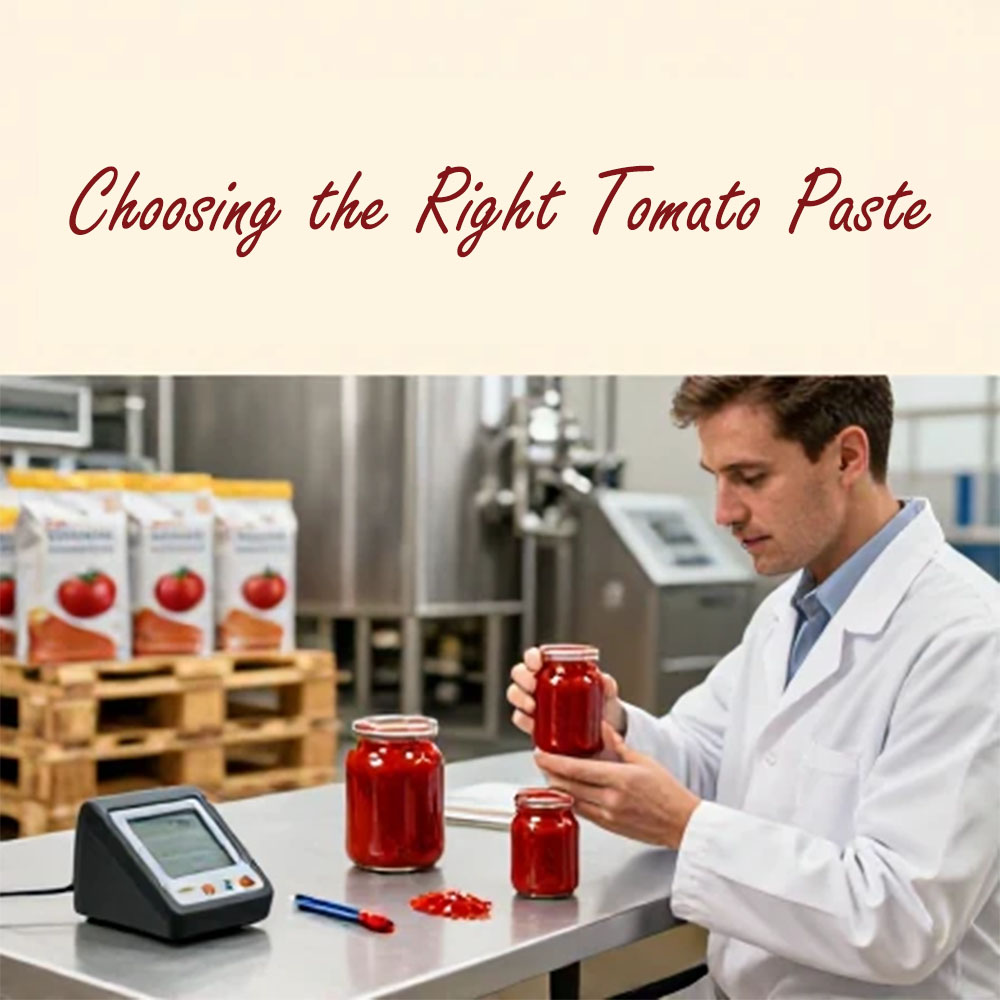
Several key parameters should be evaluated when selecting tomato paste:
- Brix Level: Measures the total soluble solids in the paste, indicating its concentration. Higher Brix levels (typically 36-42%) generally indicate a more concentrated and flavorful paste.
- Acidity (pH): A lower pH (typically 3.8-4.2) indicates higher acidity, which contributes to flavor and acts as a natural preservative.
- Color: The color should be a deep, uniform red, indicating high lycopene content and good quality.
- Viscosity: Affects the texture and mouthfeel of the final product.
- Moisture Content: Lower moisture content contributes to longer shelf life.
4. Sourcing and Supplier Considerations
- Reputation and Reliability: Choose suppliers with a proven track record of delivering consistent quality and reliable supply.
- Certifications: Look for certifications such as HACCP, BRC, or SQF, which demonstrate adherence to food safety standards.
- Traceability: Ensure the supplier can provide traceability information, allowing you to track the origin of the tomatoes.
- Sustainability Practices: Consider suppliers committed to sustainable agricultural practices.
5. Types of Tomato Paste Available
- Double Concentrated: Higher Brix level (typically 42-45%) for a more intense flavor and reduced moisture.
- Regular Concentrated: Standard Brix level (typically 36-40%).
- Smooth vs. Textured: Smooth paste is ideal for sauces and purees, while textured paste may be preferred for applications where a chunkier consistency is desired.
6. Storage and Handling
Proper storage and handling are crucial to maintain the quality of tomato paste.
- Cool, Dry Place: Store in a cool, dry place away from direct sunlight.
- Airtight Containers: Use airtight containers to prevent oxidation and moisture absorption.
- FIFO (First-In, First-Out): Implement a FIFO system to ensure older stock is used first.
Conclusion
Selecting the right tomato paste is a critical decision for food manufacturers, impacting product quality, cost-effectiveness, and consumer satisfaction. By understanding the factors outlined in this guide – from tomato variety and processing methods to Brix level and sourcing – manufacturers can make informed purchasing decisions that optimize their products and maintain a competitive edge. Careful consideration of these factors will ensure that your tomato paste contributes positively to the flavor, color, and overall success of your food products.